

Create Your Colorful Spring Garden with Authentic Dutch Tulip Bulbs
Create your colorful spring garden with flower bulbs in a variety of colors. Whether you dream of bold darwin hybrid tulips, elegant lily flowered varieties, or stunning double tulips, ordering authentic tulip bulbs from the Netherlands brings the magic of Holland directly to your garden.
Important Note: These tulips will only bloom in spring 2027 — here's why this timing matters for your success.

Transform Your Garden Into a Spring Paradise
Who wouldn't want tulips blooming in their own garden just like the spectacular displays in Dutch tulip fields? These popular flowers have captivated gardeners since the famous tulip mania of the 17th century, and today you can experience the same breathtaking blossoms right at home.
The challenge many gardeners face is finding quality tulip bulbs imported directly from expert growers who understand the precise conditions these flowers need to thrive. When visiting the beautiful tulip fields or the famous Keukenhof Park in Lisse, you see thousands of tulip varieties in every shade of pink, purple, orange, and yellow — and you want that same stunning display in your own earth.
Through our partnership with mydutchflowers.com, you can now order fresh Dutch tulips for worldwide home delivery. Whether you're planning a garden transformation, creating container displays for your balcony, or establishing perennials that will bloom year after year, authentic Netherlands-grown bulbs provide the foundation for spring success.
Why Choose Dutch Bulbs
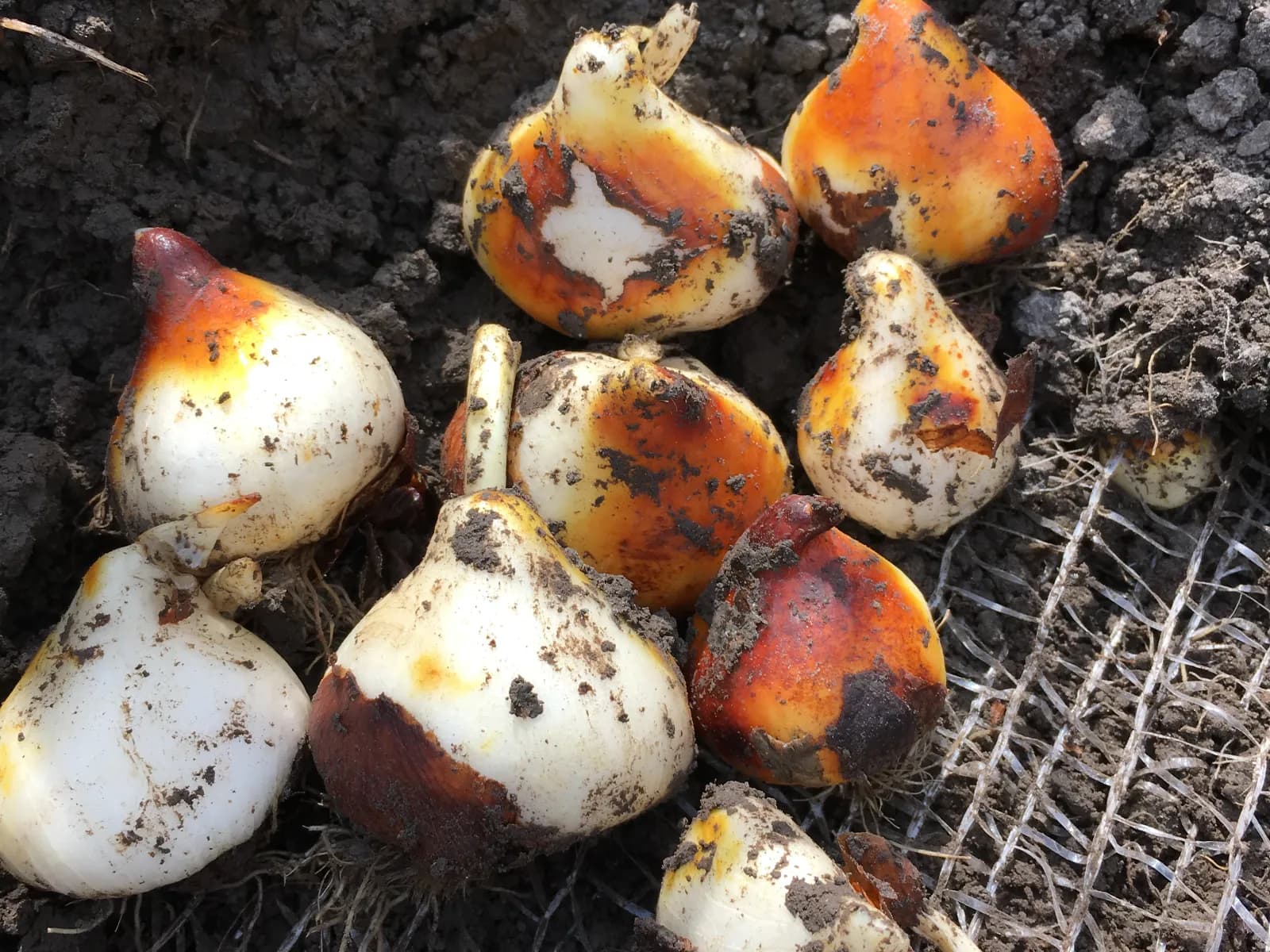
Ordering tulip bulbs from the world's tulip capital ensures you receive the highest quality specimens, properly cultivated and treated for optimal bloom performance.
Authentic Netherlands Heritage – Every bulb originates from Holland, where the tulipa genus has been perfected over centuries since bulbs first arrived from Turkey (the turkish word for turban inspired the flower's name)
Direct Home Delivery Partnership – Through mydutchflowers.com, bulbs are shipped straight to your door with proper handling from harvest to your garden
Guaranteed Cold Treatment Process – Professional temperature control at stable 20°C during development ensures next season's flower forms correctly within the bulb
Over 3,000 Varieties Available – From early spring bloomers to late-season specimens, including darwin hybrid tulips, fringed types, parrot tulips, and classic species tulips
Expert Growing Guidance – Former growers provide professional advice during tulip tours, helping you select varieties that will thrive in your specific climate and soil conditions
Simple Ordering Process
Understanding the tulip growing cycle helps you appreciate why our delivery timeline produces superior results compared to bulbs purchased from local garden centers.
Step 1: Place Your Order Anytime
Order through our mydutchflowers.com partnership whenever inspiration strikes. Whether you're visiting Keukenhof in spring or planning your fall garden from home, your order enters our system for the next available shipment season.
Step 2: Receive Your Bulbs in September
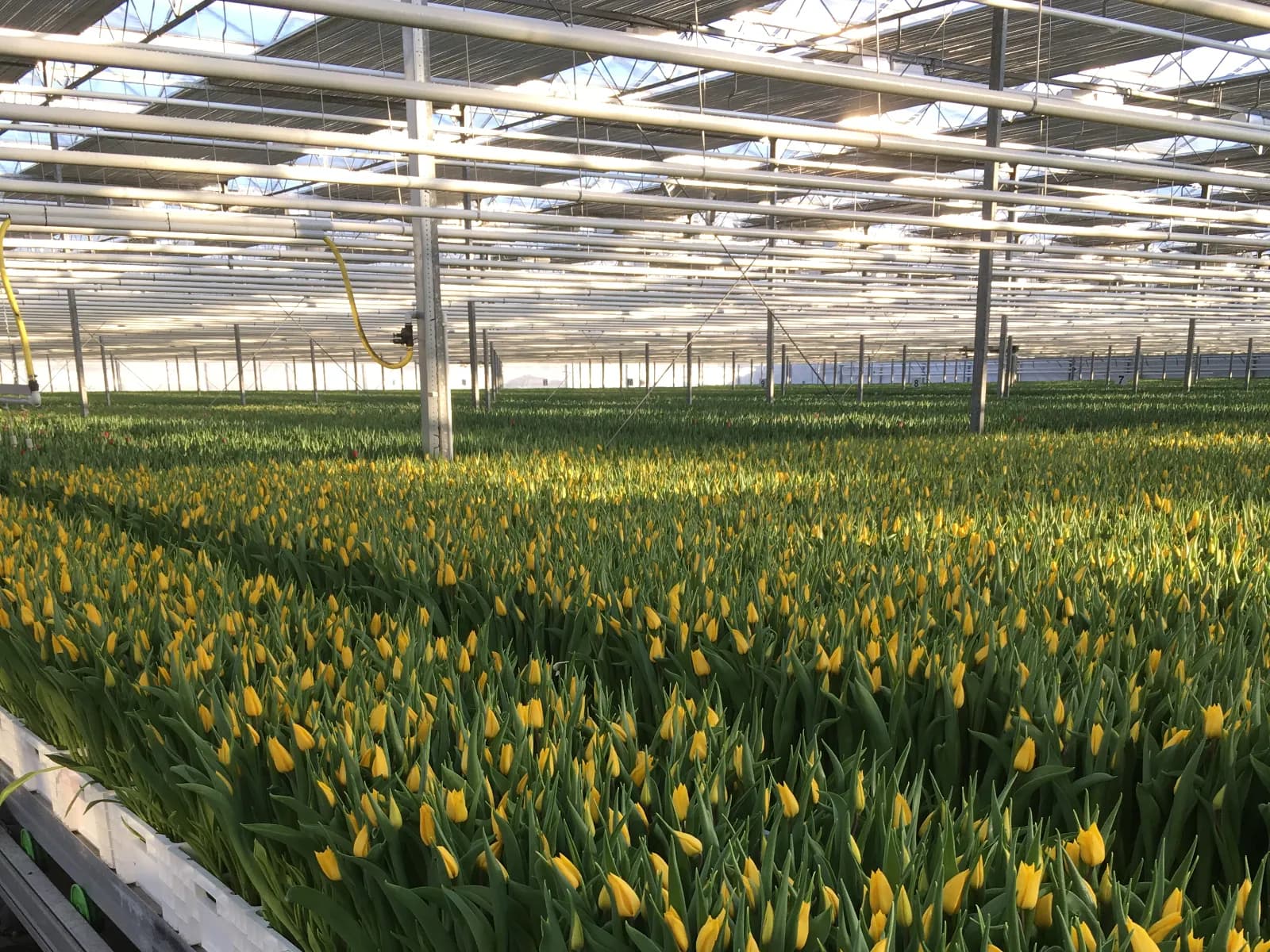
After the April/May bloom and harvest, tulip bulbs need 8-10 weeks of development at a constant temperature around 20°C. During this critical period, the flower for next year develops inside the bulb. By September, your bulbs are fully prepared and shipped to your address worldwide.
Step 3: Plant in October-November for Spring 2027 Blooms
Once your bulbs arrive, plant them 6 months before you want to see flowers. This timing allows the crucial 15-16 week cold period (the "strength period") that tulip bulbs require to build energy reserves for spectacular spring displays. By March, growth begins rapidly, and within 25 days your garden fills with color.
Expert Planting Guide
The difference between mediocre tulips and show-stopping displays comes down to proper treatment before planting. Our bulbs stand apart from mass-market alternatives in several important ways.
Temperature-Controlled Development – Unlike bulbs that sit in warm warehouses, ours complete their full development cycle under precise 20°C conditions, ensuring the flower primordium forms correctly for robust stems and large blossoms
15-16 Week Cold Period Expertise – Our planting guides ensure you understand exactly how to provide the dormant chill period tulips need, whether through natural winter conditions or refrigerator storage for tropical climates
Professional Consultation Access – During tulip tours, experienced guides (former growers) recommend specific varieties based on your soil type, climate zone, and desired bloom timing — knowledge you won't find on a seed packet
Tropical Climate Solutions – We provide detailed instructions for customers in warm regions: store bulbs in your refrigerator for at least 12 weeks, then plant in containers with consistent moisture so roots develop properly before the bulb senses warmth and begins growing
Planting Depth and Spacing
Plant bulbs 10-15 cm deep in the ground. If you experience harsh winters with freeze-thaw cycles, go deeper (15 cm) to insulate bulbs from temperature fluctuations. Space bulbs 5-10 cm apart for a full, natural appearance.
Soil and Moisture Requirements
Ensure soil is moist at planting time, but tulip bulbs require minimal watering during winter while they rest in their dormant state. Well-draining soil prevents rot — if your ground holds water, consider raised beds or container planting.
Growth Timeline
After their cold period, tulips respond to warming soil and lengthening light by sending up foliage in March. Growth accelerates rapidly, with full bloom occurring 3-4 weeks later in April and May. Each flower lasts 1-2 weeks, so planting multiple varieties extends your season significantly.
Climate Zone Considerations
Cold winters (below 5°C): Plant October-November and let nature provide the chill
Mild winters (5-10°C): October-November planting still works, but choose early-blooming varieties like Kaufmanniana or Fosteriana
Tropical climates: Refrigerate bulbs 12+ weeks before planting in containers; place in a sunny spot on your balcony or terrace
Create Layered Gardens
One of the most impressive techniques from Dutch garden design involves planting multiple bulb layers for continuous blooms throughout spring — a method that transforms any space into a flower-filled paradise.
The Layering Technique
You can plant different bulbs at varying depths so they bloom in succession:
15 cm deep: Tulips (bloom mid-April to May)
10-12 cm deep: Daffodils (narcissus) (bloom late March to April)
5-8 cm deep: Hyacinths and crocuses (bloom early March to April)
How to Create Your Layered Bed
- Dig a hole 15 cm deep and 20-30 cm in diameter
- Place tulip bulbs at the bottom, pointed end up
- Cover with 5 cm of soil
- Plant hyacinth and daffodil bulbs above, leaving 5 cm between each
- Add another 5 cm of soil
- Plant crocuses or other small companion bulbs near the surface
- Fill remaining space with soil
The Spectacular Result
This creates continuous color from early March through mid-May. As crocuses fade, daffodils take over; as daffodils finish, tulips burst forth in bold waves of color. The bulbs grow alongside each other without competition, and foliage from earlier bloomers helps hide the stems of later flowers.
Varieties & Options
From the beginning of spring to late May, different tulip varieties offer distinct characteristics in shape, style, and color.
Classic Bulb Collections
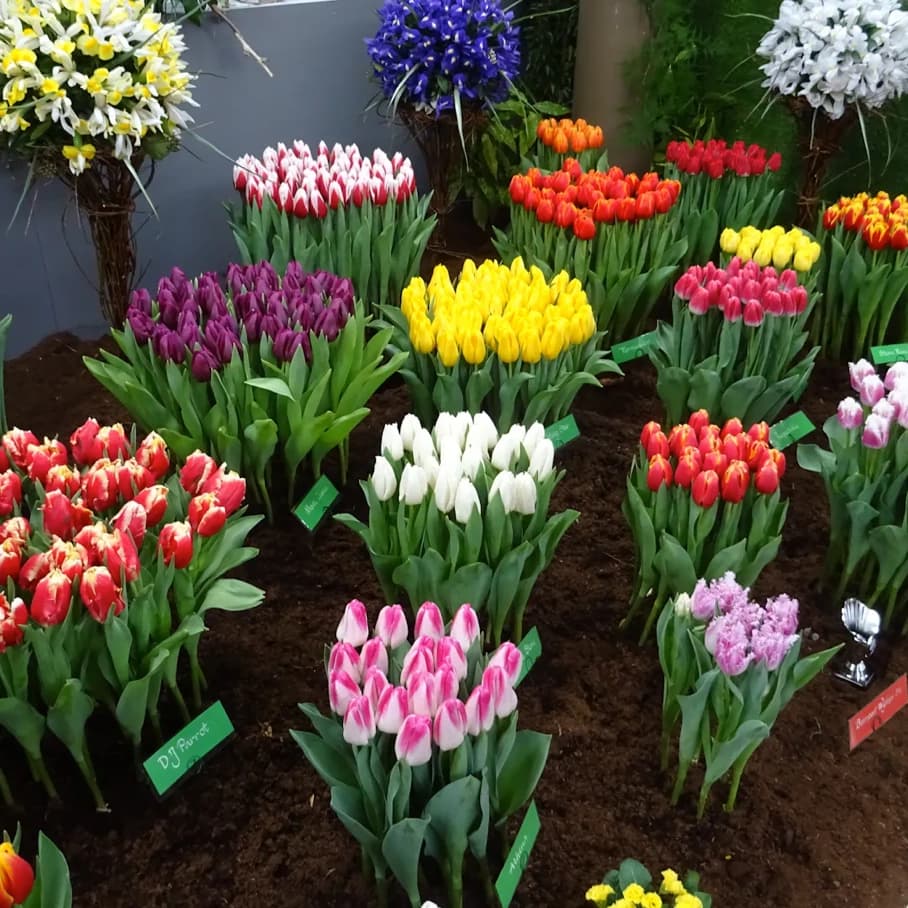
Tulips – Available in every color from pure white to near-dark purple, with bloom forms including single, double tulips, parrot, fringed, and lily flowered
Daffodils (Narcissus) – Yellow, orange, and white varieties that naturalize well and return year after year as reliable perennials
Hyacinths – Fragrant spikes of densely packed flowers in pink, purple, blue, and white
Bloom Timing Options
Early Season: Kaufmanniana, Fosteriana, and Greigii tulips bloom early, often by late March
Mid-Season: Triumph and darwin hybrid tulips fill the April window with large, bold flowers on straight stems
Late Season: Single Late, Lily-flowered, and Fringed varieties extend the show into May
Container and Balcony Solutions
Tulips thrive in pots and containers, making them perfect for terraces, balconies, and patios. Use well-draining potting soil, plant 5-7 bulbs per 20 cm diameter pot, and ensure containers receive adequate light during the growing season.
Customized Packages
Order via mydutchflowers.com to receive a customized bulb package featuring your preferred varieties, colors, and bloom times.
Order Your Tulip Bulbs Today
The sale window for 2026 orders (spring 2027 bloom) is open now. Don't miss your chance to create the spring garden you've always envisioned.
Order Your Dutch Tulip Bulbs TodayPay now, receive your bulbs in September, and enjoy stunning spring flowers next year.
Want Inspiration First?
Visit Keukenhof Park during the Dutch spring to see thousands of tulip varieties in bloom. Discover which cultivated specimens bloom early or late, and note your favorites for your order.
Book Your Tulip TourProfessional Consultation
During a tulip tour, experienced guides (former growers) provide personalized recommendations based on your garden conditions. They explain exactly how to plant tulip bulbs, care for, and maximize your investment in Dutch bulbs.
Frequently Asked Questions
🔹 Why are tulip bulbs only delivered in September?
After the April harvest, tulip bulbs need 8-10 weeks of development at a stable 20°C temperature. During this period, the flower for next season forms inside the bulb. Shipping earlier would skip this essential development phase, resulting in weak or non-blooming bulbs. September delivery ensures fully mature, ready-to-plant specimens.
🔹 How long should tulip bulbs be chilled?
Tulip bulbs require 15-16 weeks of cold temperatures (below 10°C) to break dormancy and build energy reserves for bloom. In cold winter regions, natural ground temperatures provide this. In mild or tropical climates, refrigerate bulbs for 12+ weeks before planting.
🔹 Can tulip bulbs be stored in the fridge?
Yes, this is essential for tropical and warm climate gardeners. Store bulbs in a ventilated container (paper bag works well) in your refrigerator for at least 12 weeks. Keep them away from ripening fruits, which release gases that can damage bulbs.
🔹 How long do tulips bloom?
Individual tulip flowers last 1-2 weeks, but the total bloom season extends 3-4 weeks as different flowers open in succession. By planting early, mid, and late varieties, you can extend your display from March through mid-May.
🔹 How many tulip bulbs per square meter?
For a full, professional-looking display, plant 20-40 bulbs per square meter depending on variety size and desired density. Darwin hybrid tulips, with their larger diameter, require more space than species tulips.
🔹 Are tulip bulbs suitable for pots?
Absolutely. Tulips thrive in containers with well-draining potting soil. Plant 5-7 bulbs per 20 cm pot, ensuring bulbs don't touch each other or the pot walls. Container growing suits all climates and allows you to move pots to optimal light positions.
🔹 Can I reuse tulip bulbs for multiple years?
Most hybrid tulips (darwin hybrid tulips, double tulips, lily flowered) perform strongly for 1-3 years before declining. Species tulips (Division 15) are true perennials that naturalize and return reliably for many years. To maximize reuse, let foliage die back naturally before removing it, fertilize after bloom, and lift bulbs in June for storage in mild-winter areas.
🔹 When should tulip bulbs be removed from the soil?
In cold winter regions, bulbs can remain in the ground year-round. In mild winter areas or where summer soil stays wet, lift bulbs after foliage turns yellow and dies back completely (late June). Dry them in a cool, dark place and store until fall planting.
🔹 What is the best planting time for tulip bulbs?
Plant tulip bulbs in October-November, approximately 6 months before your desired bloom period. This timing allows the full 15-16 week cold period before spring growth begins.
🔹 Can tulips bloom in warm winters?
Warm winters without adequate cold periods result in weak or absent blooms. If your winter temperatures don't consistently drop below 10°C for 15-16 weeks, pre-chill bulbs in the refrigerator before planting. Early-blooming varieties (Kaufmanniana, Fosteriana) require less chill than late bloomers.
🔹 When do tulips bloom?
In the Netherlands and similar climates, tulips bloom April-May. Read more about bloom timing. Timing varies by variety and location: early species bloom late March, while late varieties extend into mid-May. In the southern hemisphere, bloom occurs September-October.
🔹 Why are my tulips not blooming?
Non-blooming tulips usually result from insufficient cold period, poor drainage causing bulb rot, virus infection (streaky or mottled foliage), or exhausted bulbs that weren't lifted and replanted. Ensure proper planting depth, adequate chill, and good drainage to prevent these issues.
🔹 How can I grow larger tulips?
For the biggest blossoms, choose darwin hybrid tulips or Fosteriana varieties, which naturally produce large flowers. Plant 15 cm deep in fertile soil, provide full light, and don't let foliage get shaded by nearby trees or other flowers that might steal nutrients.
🔹 How can I ensure tulips bloom for multiple years?
Select species tulips (Division 15) known for perennial reliability. Allow foliage to yellow naturally after bloom so nutrients return to the bulb. Fertilize lightly after flowering, ensure adequate summer drainage, and divide crowded clumps every 3-4 years.
🔹 Which tulips bloom every year?
Species tulips like Tulipa clusiana, T. tarda, T. sylvestris, and T. biflora are native types that naturalize and return reliably as true perennials. Among hybrids, Kaufmanniana, Fosteriana, and Greigii divisions show better multi-year performance than Single Late or Parrot types.
Start Your Spring Garden Today
The tulip bulb follows nature's cycles — that's why spring flowers always make everyone happy.
Order Your Dutch Tulip Bulbs TodayWorldwide Delivery | September Shipment | Professional Growing Support
Experience tulips in Holland first? Book our Tulip Tour from Amsterdam to see thousands of varieties and get expert advice from former growers.
